I haven’t posted in a couple weeks as progress on the loom cleanup has been slow. Partly I needed a bit of a respite, and partly I had other responsibilities to attend to. I have made some progress, however. I finished up the heddle bars, treadle springs, and started to de-rust the jacks. I did one jack, but it took a couple days of work and I’m not really happy with the results. While mulling that situation over, I ran across a link on Weavolution to this site: http://www.rickswoodshopcreations.co/Miscellaneous/Rust_Removal.htm
For a small investment in equipment, you too can remove rust with minimal effort! I tried this method out on the crank that turns the warp beam.
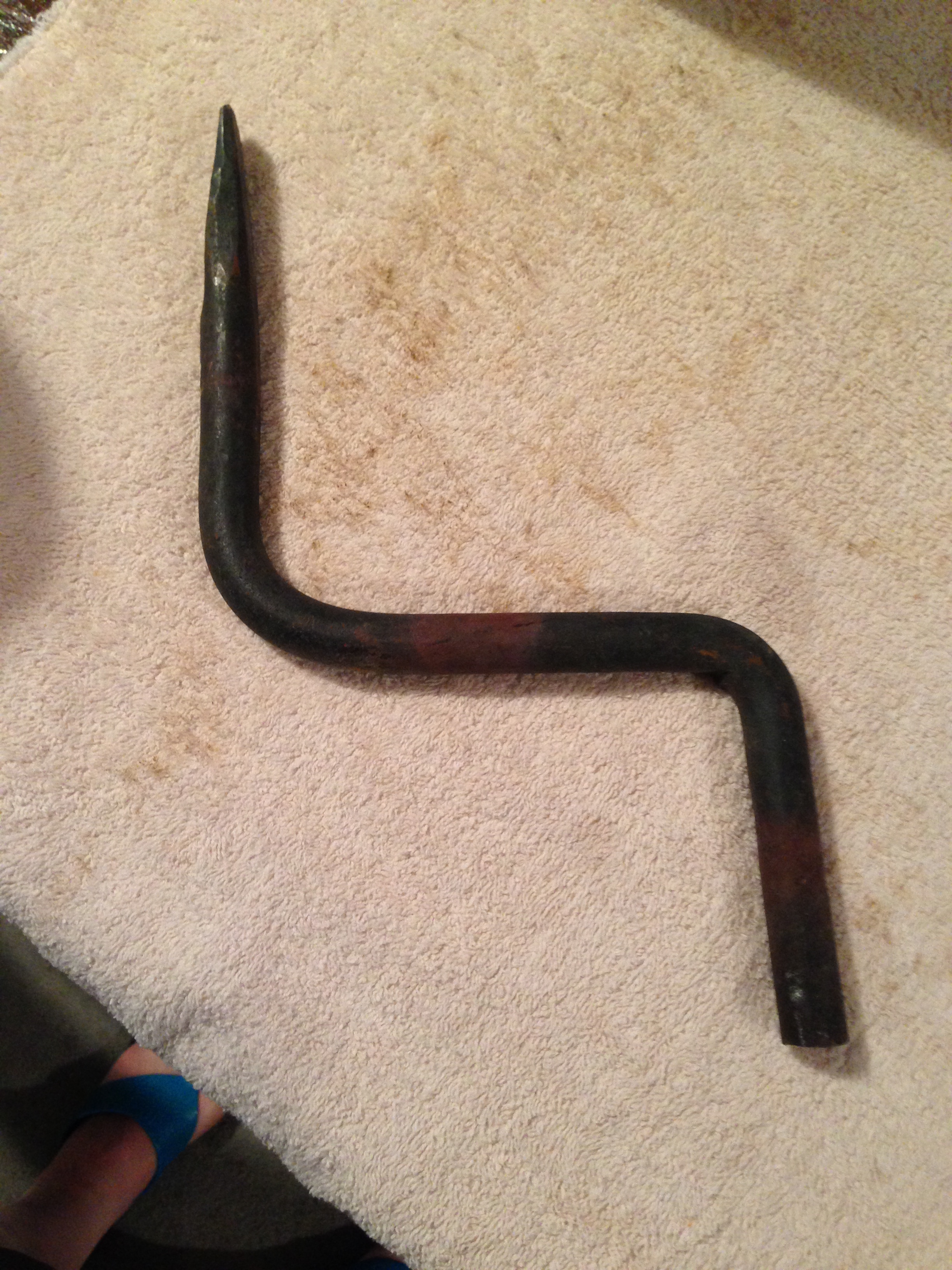
Following the directions I hooked up the crank to the negative lead of the charger, hooked the positive lead to an old stainless steel food processor blade that I got at our transfer station’s “Swap Shop”, submerged the crank and half of the blade in electrolyte solution, plugged it in and went and did something else for a couple hours.
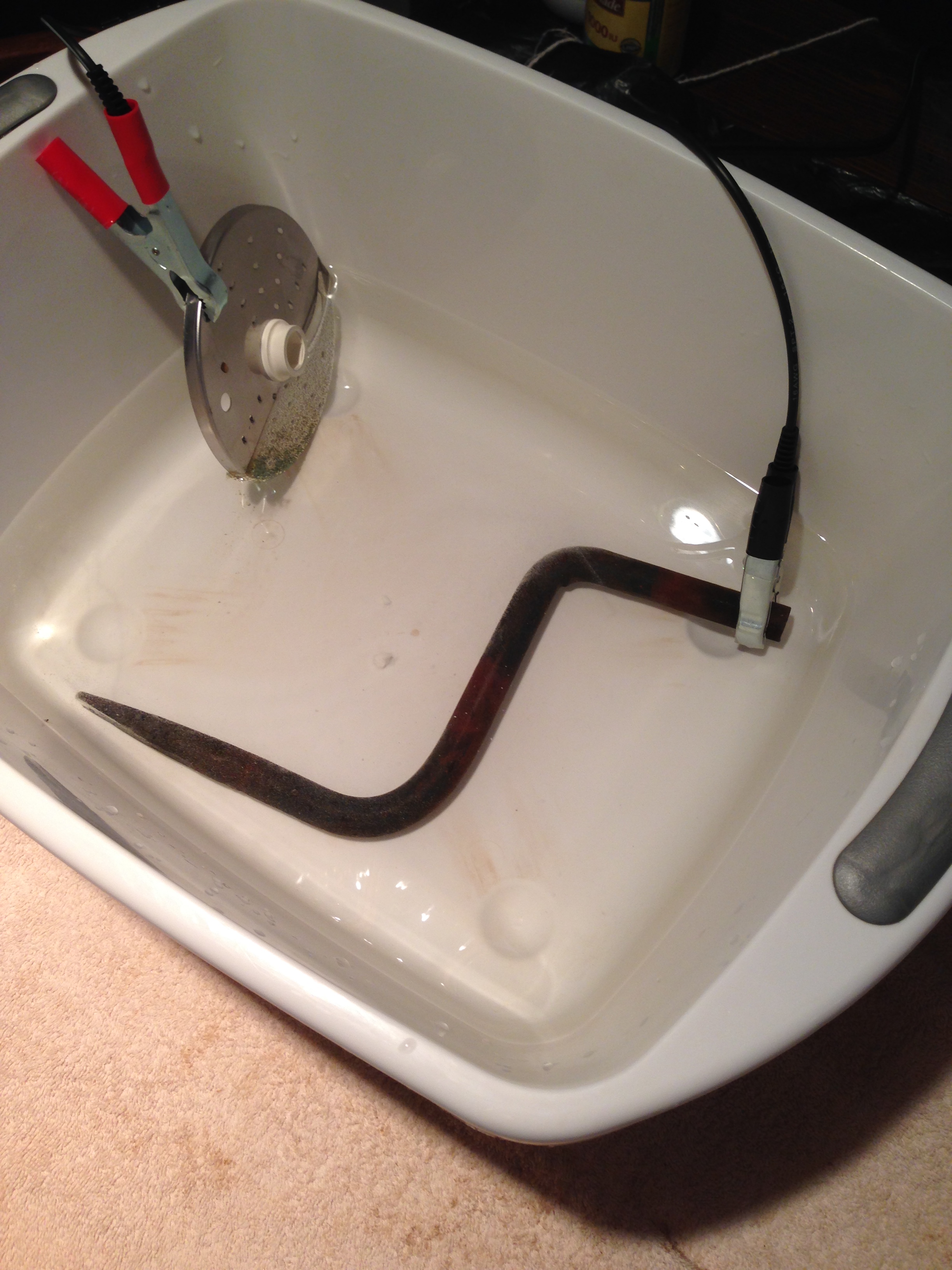
When I came back, the rust was gone. The electrolysis solution was pretty gunky, as was the food processor blade, but the crank is back to usable metal. If this method works for the jacks it will make cleaning them up so much easier.

The tricky part is that the jacks are almost 36” long. I had to wrack my brains to figure out where I could get a plastic container that would allow me to fully submerge a 36” long object. The longest plastic storage container I could find was more like 35”. Trash cans are not 36” deep. I finally was able to find a long pvc window box liner. I will test out this system on the jacks sometime this week. I’m not one hundred percent sure that the window box liner is watertight, so the test will have to be done in good weather outdoors. There are plenty of smaller pieces of metal to take care of until then.
The most exciting part for me in using the electrolysis (well, in addition to the fact that it’s pretty cool to see it work) is that it frees up the time I had been using to scrub off rust and allows me to do other things. When I bought this loom I had just finished a project on the Tools of the Trade loom, and I haven’t had enough time to start another. I miss weaving. I have already started getting a warp ready for the next project.
The heddles are all clean, all 1,853 of them. As I mentioned before I know some of them will likely have to be discarded, but I wouldn’t expect to need 1,800 anyway. I have also finished cleaning all the metal bits that are still attached to the wood of the loom. In addition to starting to clean the jacks this week I hope to spend some time cleaning the wood. There is old packing tape residue to be removed, as well as general dirt and mildew. I do think I see a light at the end of this tunnel, though!

 Maple Woods Handweaving