Reflections

This project of refurbishing a old loom took much longer than I anticipated. I had estimated it would take a month, in fact it was more like three or four.  And I was lucky; although the loom was dirty and rusty, all the pieces were there (excepting a few nuts and bolts which were easily replaced) and all the parts were usable.  If I had needed to replace anything significant I’m not sure how I would have gone about doing that.

By far the most time consuming part of the process was getting rid of rust. I learned more about removing rust than I knew there was to know.  Thank goodness for Google! I tried white vinegar and steel wool, Coke and steel wool, naval jelly and steel wool, WD40 and steel wool, and finally electrolysis.  For pieces that were not attached to wood or other non-metal pieces the electrolysis was much faster, easier, and cleaner.  For pieces bolted to wood WD40 and steel wool worked best.  Once the major work of removing rust was done, a quick scrubbing with aluminum foil often helped bring a shine to the metal.

I wasn’t able to salvage all of the rusted metal.  Although I was able to clean much of the rust off of the reeds with a combination of electrolysis and scrubbing, I was not able to get all the rust (even after several tries), and I could see and feel that the clean dents had been roughened by the rust. I decided it was best to discard them rather than risk broken threads while weaving.

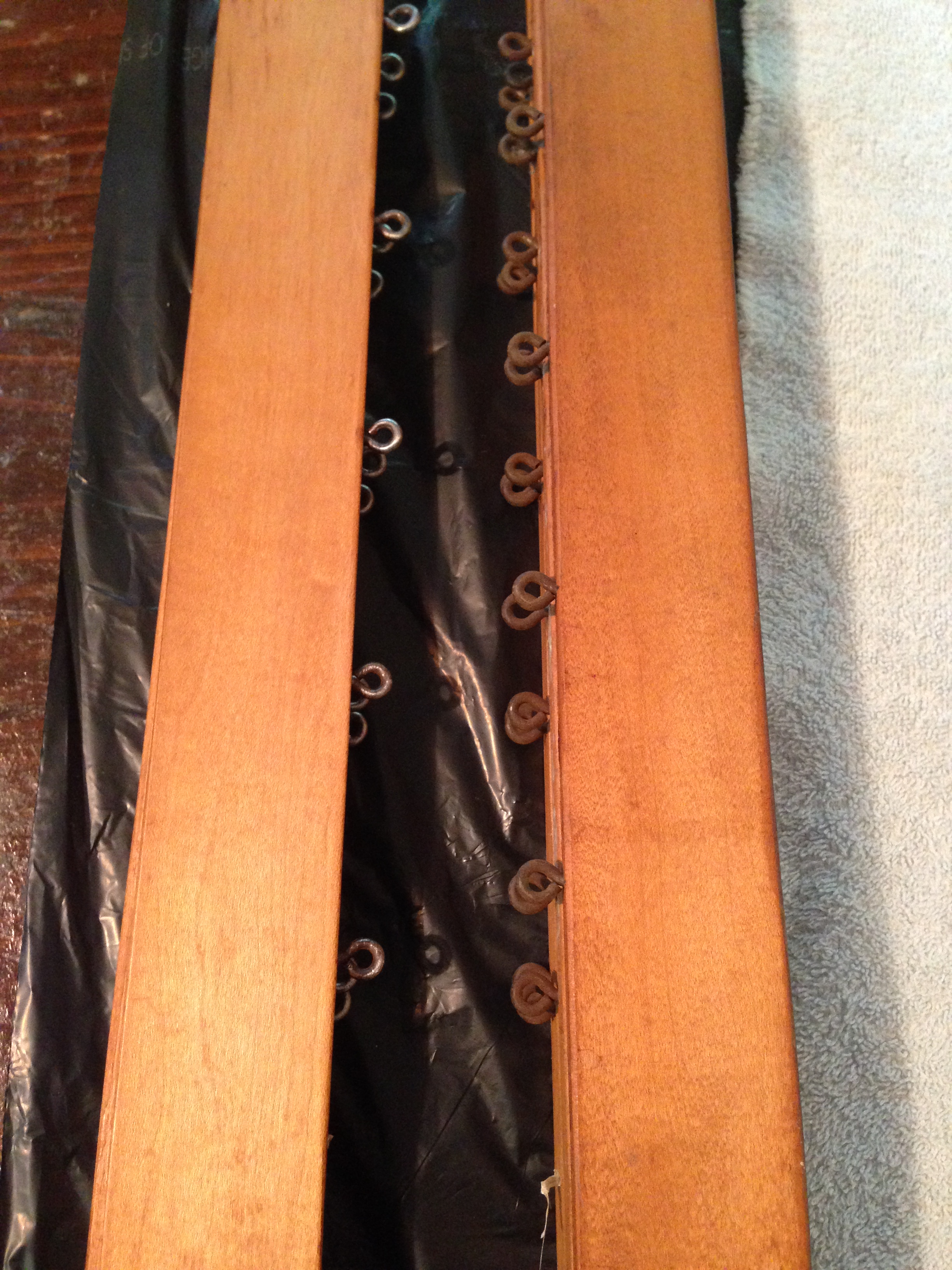
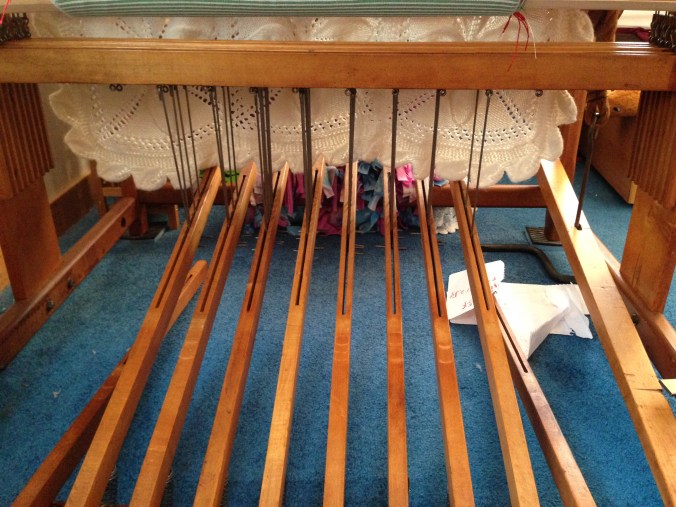
I’ve been using the loom regularly since I put it together, and it works pretty well.  Early on I noticed a tendency for the metal treadle hooks which tie the treadles to the lamms to tangle with each other causing some shafts to rise when they weren’t wanted.  These metal pieces are thin rods with a hook at one end that hooks onto an eyebolt on the lamm. The end of the rod opposite from the hook is bent at a right angle so the end can catch under the treadle. The right angle bend on some rods protrudes to the left side of the hook, on others to the right side. I realized that it is best to alternate the direction of the right angle bend on a treadle, especially when that treadle is tied up to several lamms, to prevent tangling.
IMG_0538

Treadle hooks tying the treadles to the lamms.


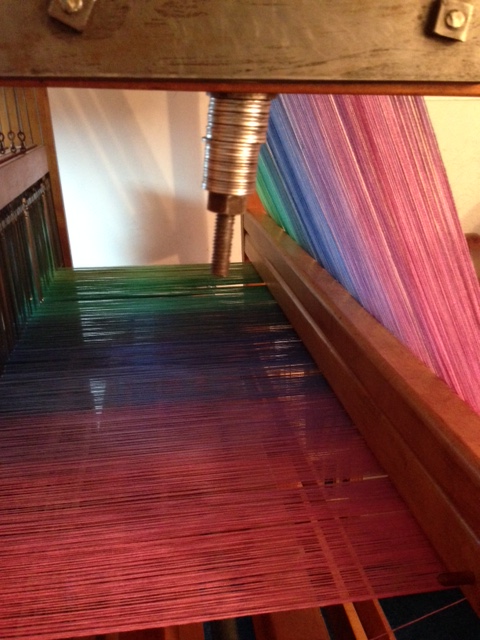
There is one issue that I still haven’t resolved. The warp beam brake is a rope that passes around a drum on the end of the beam.  The rope is attached to the frame of the loom on one end, and to a long eyebolt at the other. The eyebolt gets inserted into a brake release handle and fastened with a washer and a nut.  The threads on the bolt are long enough to allow the brake to be adjusted by tightening or loosening the nut.  I adjusted this brake when I started my first project so it was tight and held the warp in place while I was weaving, but as I wove along it began to loosen and slip.  I re-adjusted it and it held for a while and began to slip again. I repeated this process until the nut reached the top of the threads on the bolt. When the warp started to slip after that point I didn’t know what to do.  I consulted with my husband (who has been very patient about staying out of the repair process until I ask for help), and he suggested adding a bunch of washers between the nut and the handle to effectively extend the length of the threads. That’s working for now. I suspect that the 70 year old rope may need to be replaced, but I find the idea of replacing it intimidating so I am putting it off as long as I can.
warp brake

Washers extending the ability to tighten the brake
Winding Down

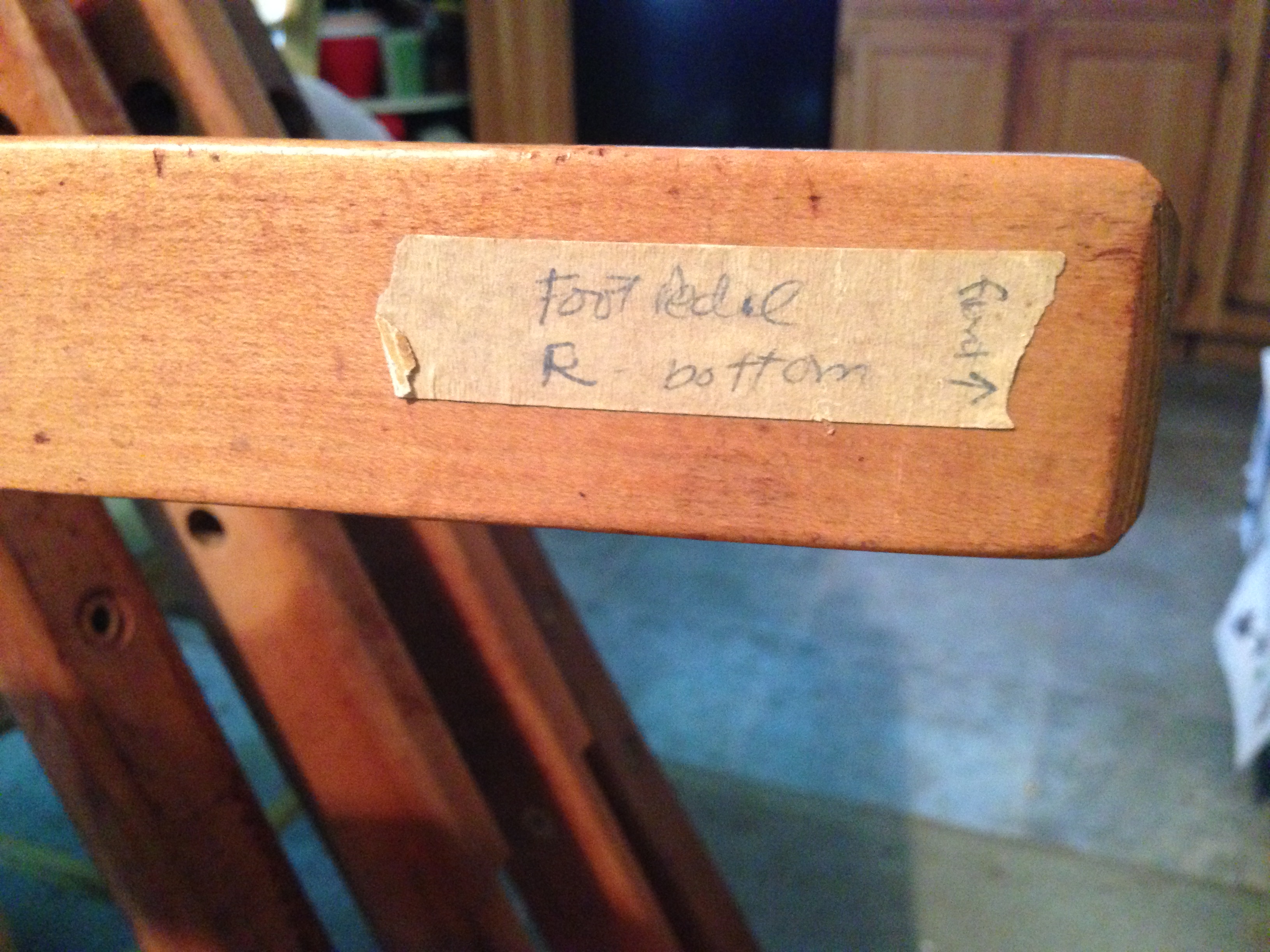
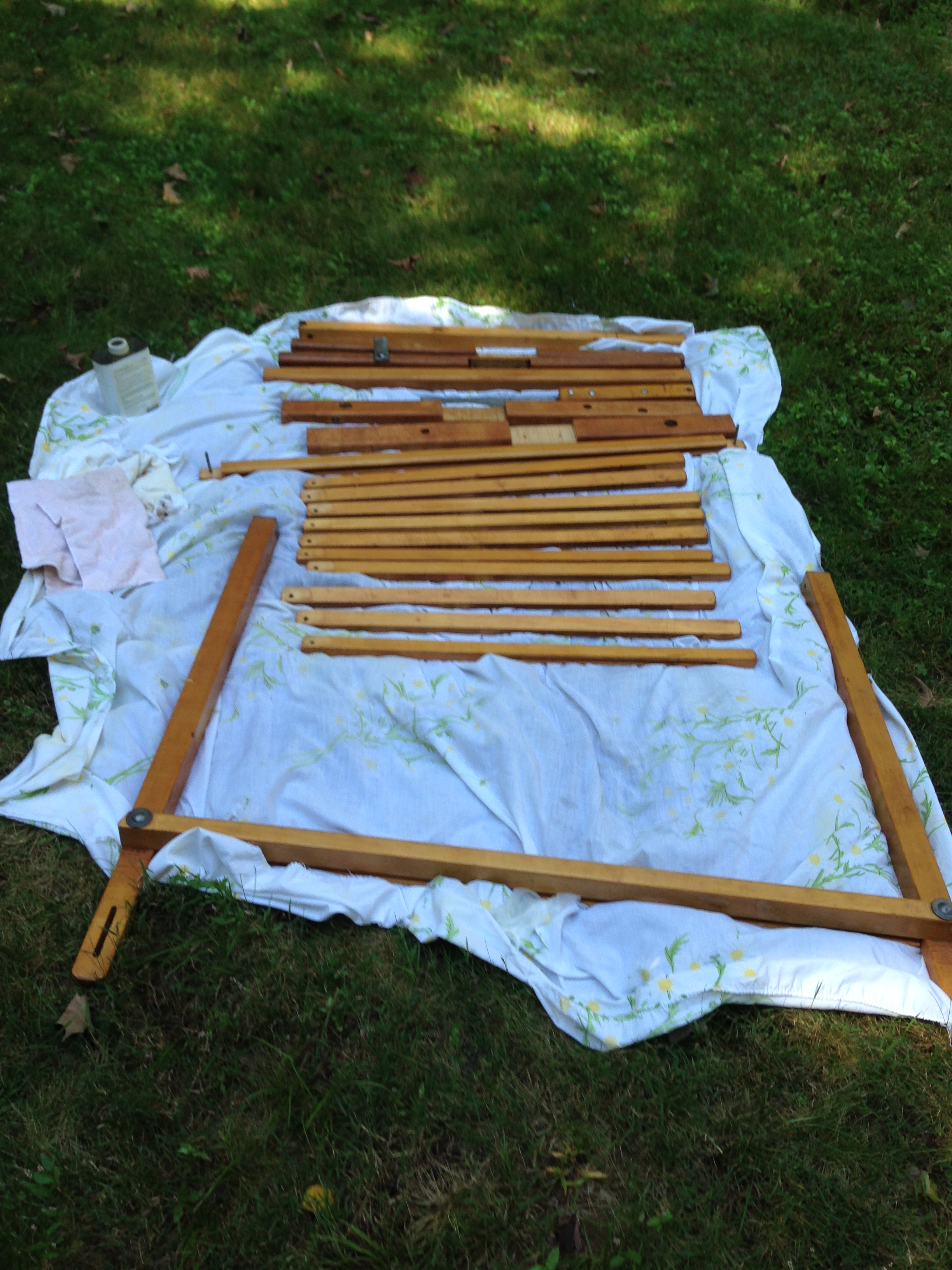
All the necessary clean-up that has to happen before I rebuild the loom has now been done. I was able to get all the masking tape off using a hairdryer and letter opener. The adhesive residue from the masking tape and the residue from packing tape (adhesive and some fibers from the string that runs through packing tape) came off with vegetable oil and gentle scraping. I washed all the pieces before and after removing the tape so that there would not be any oil left on anything.  Once I had rewashed all the wood parts I coated each one with a layer of tung oil. Washing made the wood look a lot better, and adding the tung oil improved it even further.

Parts of the loom drying off after tung oil was applied.

Parts of the loom drying off after tung oil was applied.

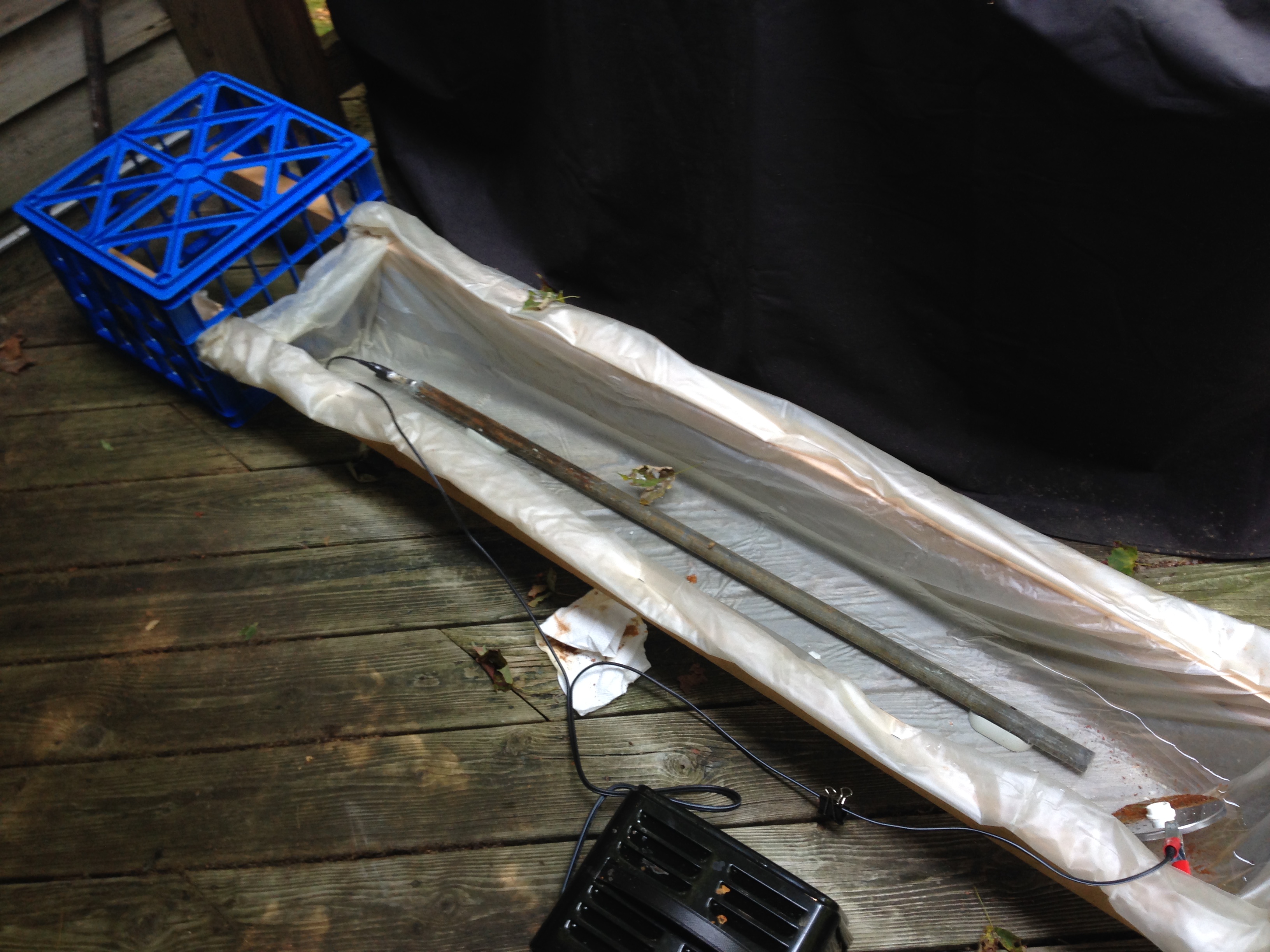
I am still working on removing rust from the reeds. I have used electrolysis on one of the reeds three times, and there is still rust on it. It gets better each time I do it, but not completely. I’m still not sure if the reeds will ever be usable. Luckily I have 32″ reeds that I can use unless I have a project that goes the full weaving width of the loom (36″).  The two metal pipes that support the warp beams got cleaned after my ingenious husband was able to jury-rig a trough to use for electrolysis. It worked very quickly and easily.

The "trough", created out of two milk crates, two 2x2 pieces of lumber, and an old shower curtain liner.

The “trough”, created out of two milk crates, two 2×2 pieces of lumber, and an old shower curtain liner.

Since the reeds are not really necessary everything is now ready to be put back together. I admit I am apprehensive about getting the pieces put back together and have everything configured right. I have diagrams and information that the previous owner wrote down when she disassembled the loom, and I have a picture of a fully assembled Binder loom to assist me. Hopefully those will be enough to get everything back where it belongs in working order!

Progress

Using electrolysis has really moved the loom clean-up project along. All the jacks are now free of rust, as is every nut, bolt, and washer. While the electrolysis was running I was able to wash all the wooden parts of the loom, so everything is clean now. The wood seems to have come back to life, it looks warm and lustrous now. I can’t tell you how nice it is to be able to touch the loom without feeling as though I need to wash my hands.

The next step is to remove masking tape. The tape was originally put on to mark parts of the loom for reconstruction (as in marking tab A to remember to insert it in slot B), but which has now hardened. When it comes off it comes off in flakes. Today I started remove pieces of it using a hairdryer and a blunt letter opener. The first piece of tape took an hour to remove, the next three took only fifteen minutes each. I guess I got through the learning curve. There still seems to be a little dried adhesive residue after the tape is off. Some of it scrapes off with the letter opener (which does a good job of getting under the tape without gouging the finish). I am going to try cleaning the rest off before I put a coat of tung oil on the wood.

IMG_0481

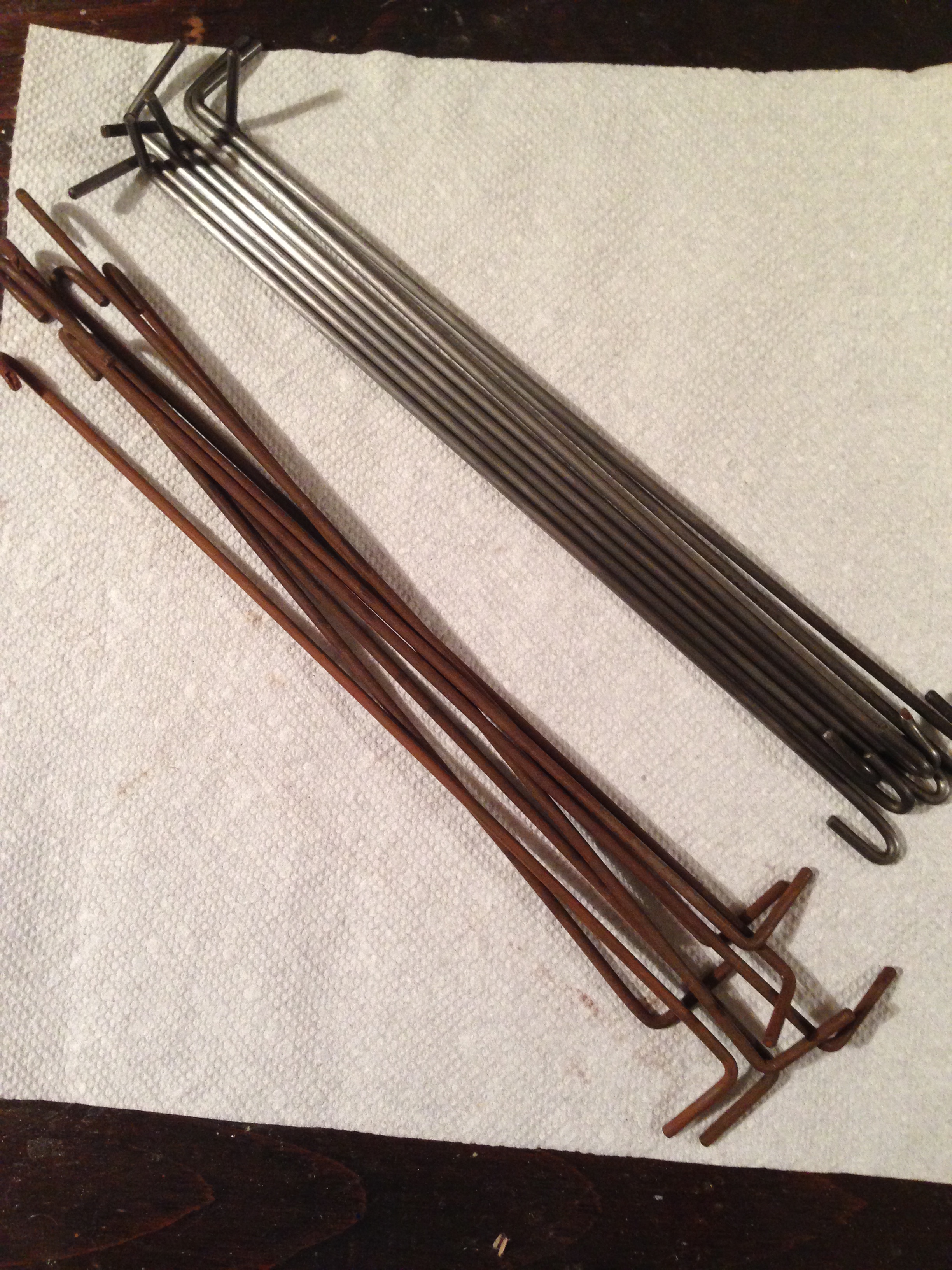
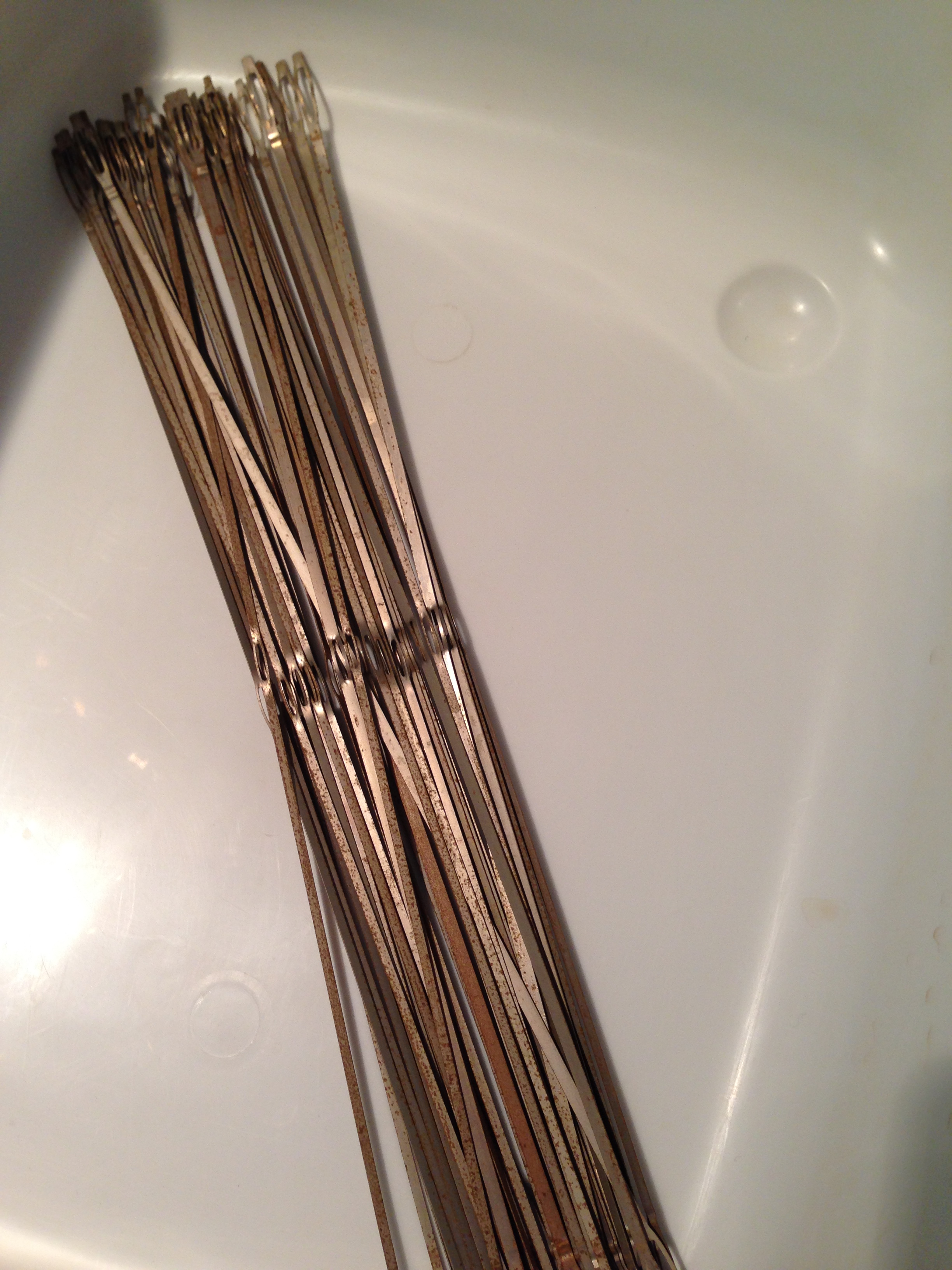
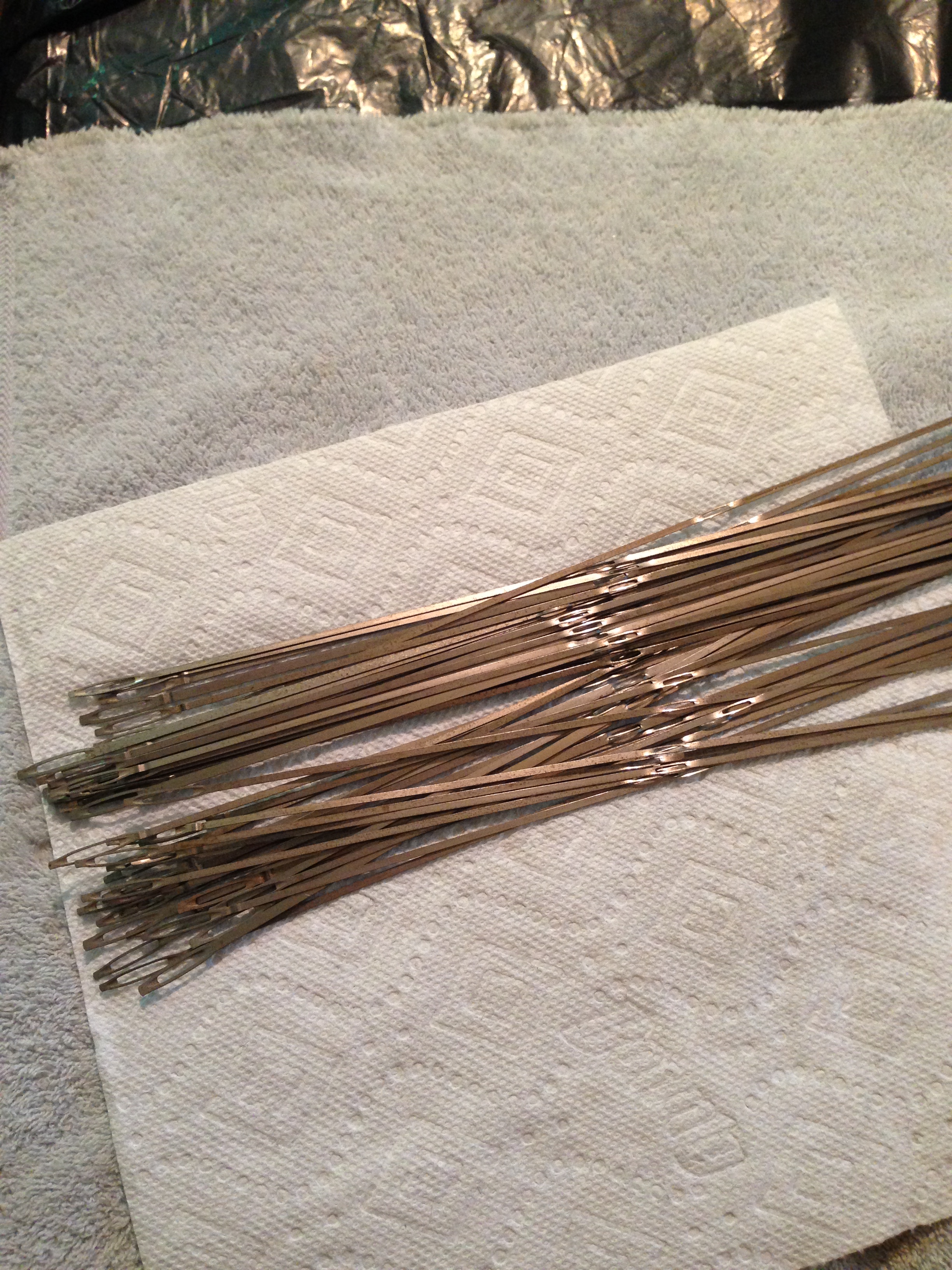
I still have 3 reeds to put through the electrolysis, as well as 40 rods for tying the treadles up to the lamms, and two metal pipes which go through the center of the warp beams. The pipes are too long even for the window box liner, so my husband has offered to jury rig something with some two by fours and plastic liner to allow me to use electrolysis for the pipes as well as the rest of the metal.

Tie-up rods

Tie-up rods

I ran across a nice 8-shaft pattern that will work as Christmas gifts if I get this loom set up quickly enough. I ordered the yarn for it, and expect it to arrive this week. I figure if I can’t get them done for Christmas this year, there’s always next year. In the meantime, this is happening on the 4-shaft (Tools of the Trade) loom:

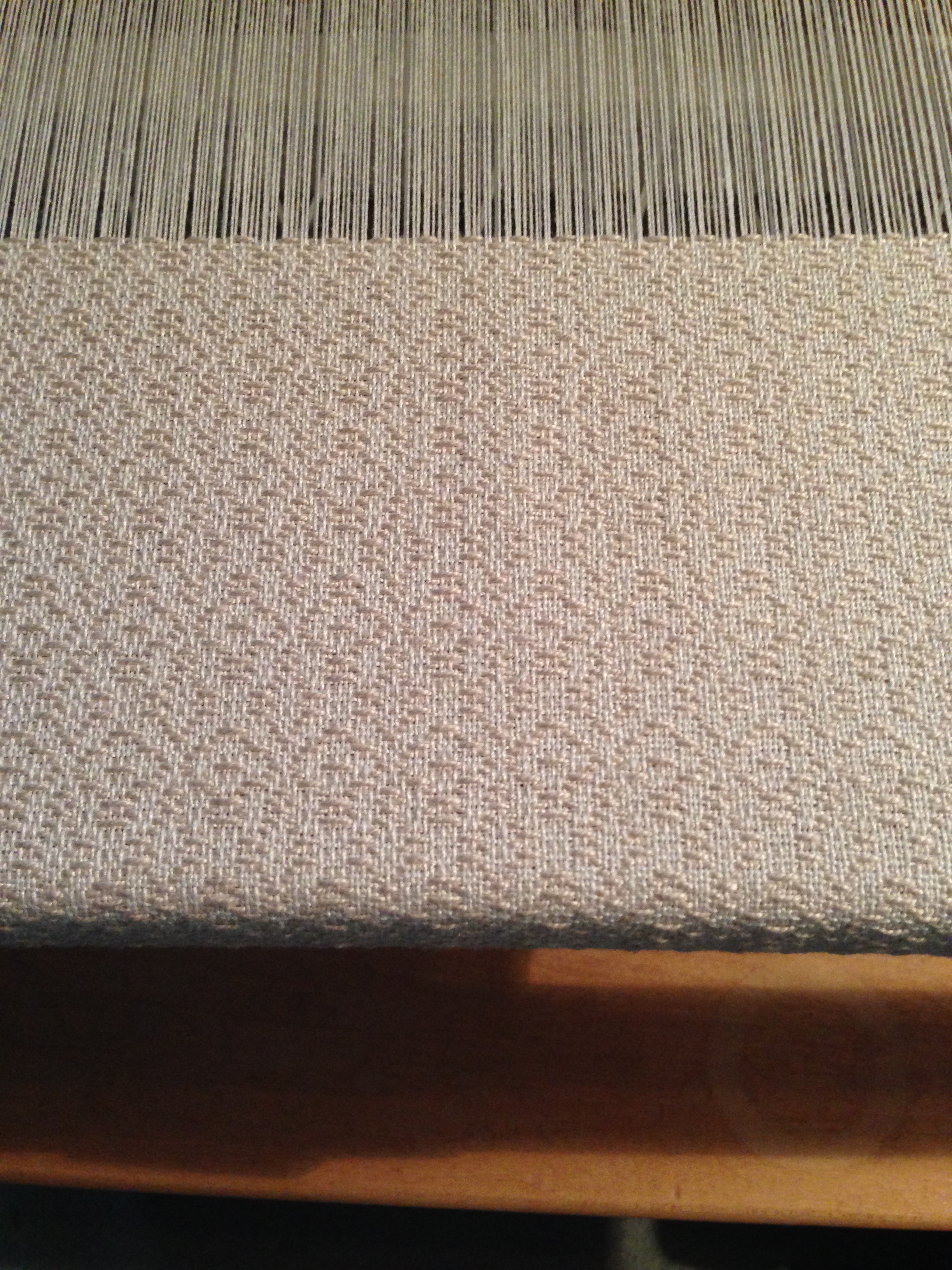
Name draft placemats

Name draft placemats

Isn’t Technology Wonderful!

I haven’t posted in a couple weeks as progress on the loom cleanup has been slow. Partly I needed a bit of a respite, and partly I had other responsibilities to attend to. I have made some progress, however. I finished up the heddle bars, treadle springs, and started to de-rust the jacks. I did one jack, but it took a couple days of work and I’m not really happy with the results. While mulling that situation over, I ran across a link on Weavolution to this site: http://www.rickswoodshopcreations.co/Miscellaneous/Rust_Removal.htm

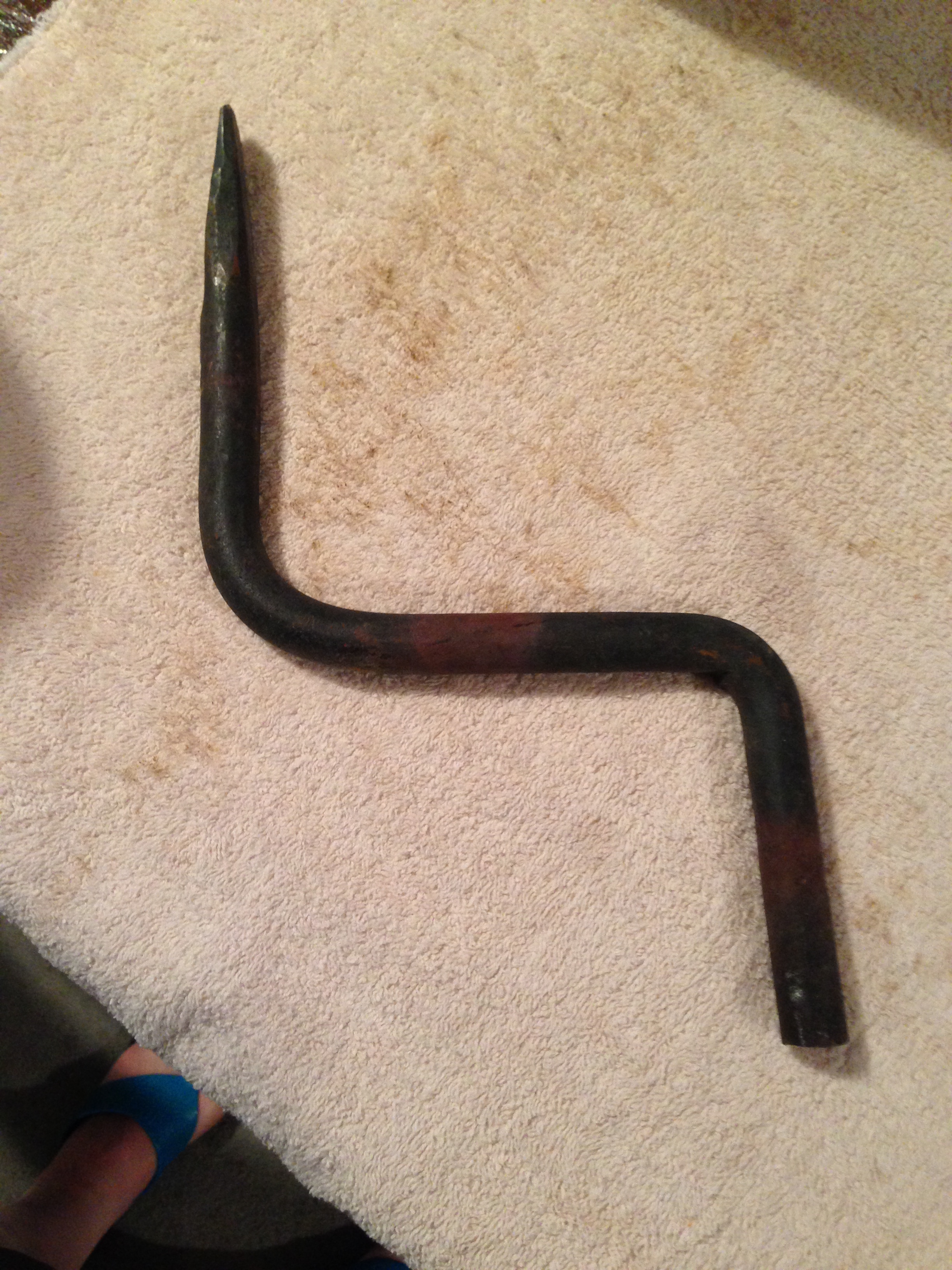
For a small investment in equipment, you too can remove rust with minimal effort! I tried this method out on the crank that turns the warp beam.

IMG_0473

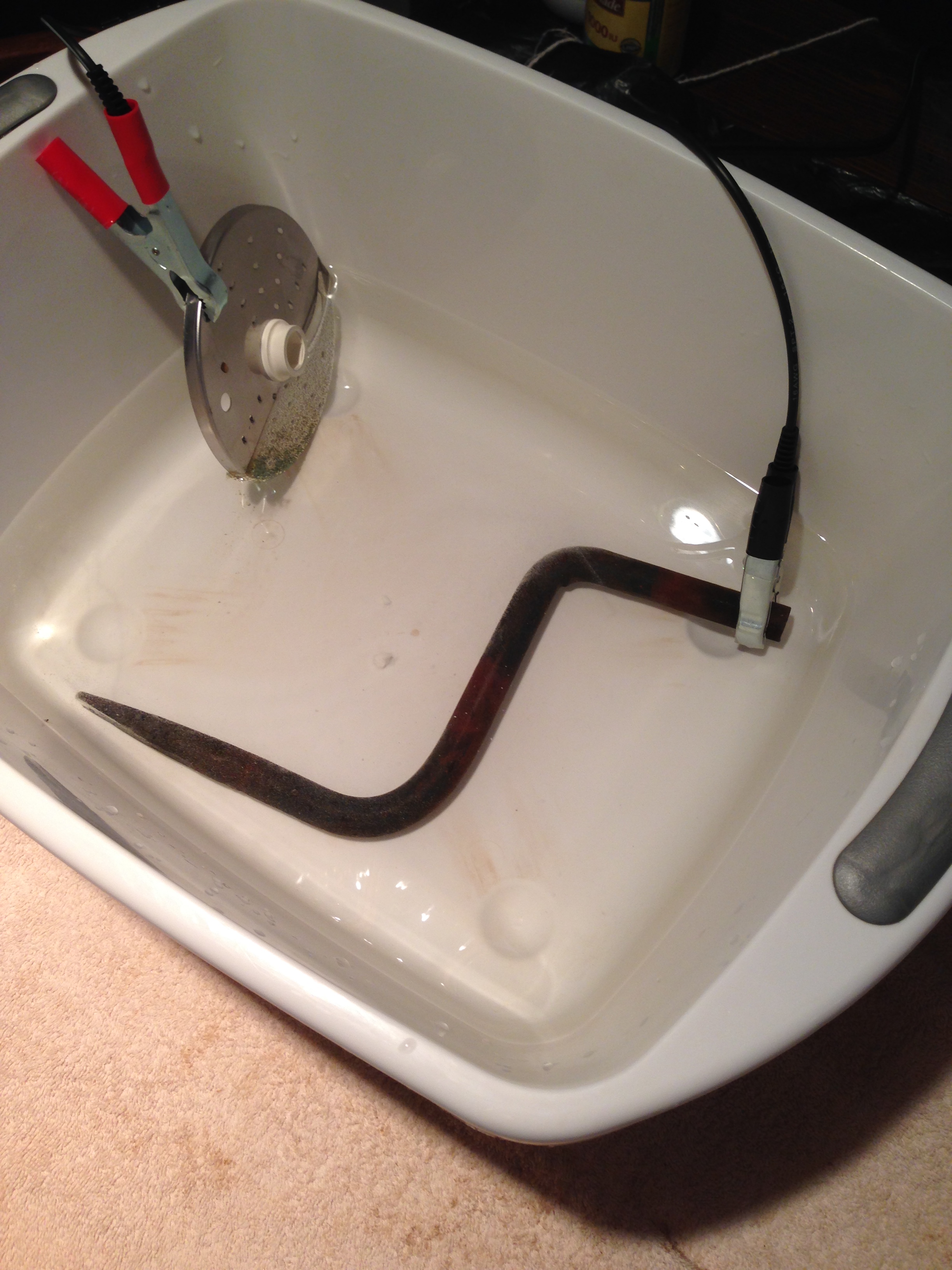
Following the directions I hooked up the crank to the negative lead of the charger, hooked the positive lead to an old stainless steel food processor blade that I got at our transfer station’s “Swap Shop”, submerged the crank and half of the blade in electrolyte solution, plugged it in and went and did something else for a couple hours.

IMG_0474

When I came back, the rust was gone. The electrolysis solution was pretty gunky, as was the food processor blade, but the crank is back to usable metal. If this method works for the jacks it will make cleaning them up so much easier.

IMG_0476

The tricky part is that the jacks are almost 36” long. I had to wrack my brains to figure out where I could get a plastic container that would allow me to fully submerge a 36” long object. The longest plastic storage container I could find was more like 35”. Trash cans are not 36” deep. I finally was able to find a long pvc window box liner. I will test out this system on the jacks sometime this week. I’m not one hundred percent sure that the window box liner is watertight, so the test will have to be done in good weather outdoors. There are plenty of smaller pieces of metal to take care of until then.

The most exciting part for me in using the electrolysis (well, in addition to the fact that it’s pretty cool to see it work) is that it frees up the time I had been using to scrub off rust and allows me to do other things. When I bought this loom I had just finished a project on the Tools of the Trade loom, and I haven’t had enough time to start another. I miss weaving. I have already started getting a warp ready for the next project.

The heddles are all clean, all 1,853 of them. As I mentioned before I know some of them will likely have to be discarded, but I wouldn’t expect to need 1,800 anyway. I have also finished cleaning all the metal bits that are still attached to the wood of the loom. In addition to starting to clean the jacks this week I hope to spend some time cleaning the wood. There is old packing tape residue to be removed, as well as general dirt and mildew. I do think I see a light at the end of this tunnel, though!

Still Plugging Away

I feel as though I haven’t made a whole lot of progress this week. Partly this is because I had other things to do besides work on the loom, and partly it is because cleaning the metal heddle bars is just taking longer than I expected. I have 3 more to do. I refined my rust removal technique a bit; I found that if I leave the rust remover on a bit longer after the initial coat it is easier to get the rust off. So now I paint both sides of the bar with rust dissolver and let it sit for 15 minutes or so. In that time the rust dissolver starts to dry up. When I’m ready to really get to work I paint a second coat of rust dissolver (over what’s already there) on the first 8-12 inches of one side of the rod. Then I scrub about 6 inches of that. After scrubbing it can be hard to see the metal since it’s covered with rust-colored goop, so I paint on a little fresh rust dissolver which cleans off the goop and lets me see if I need to scrub any of that part further. When painting the fresh coat on I extend the area I’m painting by another 4 inches or so, and continue working down the length of the rod this way. I’m glad to have worked this out before tackling the jacks.


In addition to cleaning the heddle rods I have also cleaned some of the springs that go under the treadles, and I’ve removed rust from the screws, nuts, and bolts that I removed from the loom to get at the heddles and treadles. I still have to de-rust the remaining springs, miscellaneous nuts and bolts from when the loom was partially disassembled in the 1970s, and the thin metal rods used for tying up the treadles. I found 16 of these metal rods loose in box that are quite extensively rusted, and many, many more in a plastic bag that have far less rust. I’m thinking I’ll start on the lightly rusted ones since I’m unlikely to use all of these tie-up rods at once.


A comparison of cleaned springs with those yet to be cleaned.

A comparison of cleaned springs with those yet to be cleaned.

I also did a little more cleaning up of metal pieces that are still attached to wood. My grandchildren will be with me all this week, so I don’t expect to be able to get to cleaning the metal jacks until the weekend. For this week I will try and finish the metal-attached-to-wood, and possibly start cleaning up the wood itself.


1210 heddles have been cleaned to date. I think my estimate of 1600 heddles total is too low, but we’ll see.

In the Meantime…

While musing on the beauties of my looms I have been continuing to make progress on cleaning up the Binder loom. I got the rust off of all the treadles (they each only have a small metal spike on them that seems to be there to help align the treadle with the springs that go under them). In addition, there are a couple metal plates attached to wood pieces (I think one is a hand brake, I’m not sure yet what the other one is for), and those are now clean. Most of the metal-attached-to-wood that is left is nuts and bolts on pieces that are still connected to each other.

The weather has been beautiful this week, so I thought I should start doing some of the metal that’s not attached to anything. The first step was to take the jack mechanism out of the castle, as the jacks are metal and not really accessible in the castle (the castle is the tall center part of the loom). That was easier than I expected. The mechanism is held in by two long bolts which came undone without any trouble. Since I was poking around I also took a look at the piece where the treadles attach to see how they fit on it. This had been a bit of a mystery to me, and I was concerned about it. The previous owner of the loom had made detailed diagrams of how to put it together when she dismantled it, but there is no diagram regarding the treadles. That may be because it’s pretty self-evident. I am no longer concerned about that part. I removed a few screws to detach a metal rod that the treadles thread onto so it could be cleaned.

A close up of part of the jack mechanism as it sits in the castle.

A close up of part of the jack mechanism as it sits in the castle.

There are 16 metal bars that fit in the harnesses (on on the top and one on the bottom of each harness) that the heddles will be suspended between. I started cleaning rust off of these using Loctite Rust Dissolver (formerly Naval Jelly). The directions say to paint on the rust dissolver, let it sit for 5-10 minutes, rinse it off, and voila! Of course it is not that easy. The bars looked better after one coat, but still rusty. My next step was to paint on a second coat of the rust dissolver and scrub with a metal bristle brush. That worked like a charm, but it takes about half an hour per bar. I was hoping to get them all done this week, but so far I have only been able to do 9. I expect to have to use the same procedure on the 8 jacks as well, and on various other small parts (the rods that tie up the treadles and nuts, bolts and screws that will be used to put the loom back together). I babysit my grandchildren 2 ½ weekdays most weeks (they were away this week), and I don’t want to be using the rust dissolver while they are around, so it may be tricky to find the time to finish the jacks. We’ll see.

The rusted bars that hold the heddles in the harnesses.

The rusted bars that hold the heddles in the harnesses.

Four of the bars that hold the heddles all cleaned up and shiny!

Four of the bars that hold the heddles all cleaned up and shiny!

I’ve finished cleaning all the heddles that were in a shoebox (775 of them) and moved on to the heddles that had been left on the loom. At this point I have done 1,000 heddles. I’m estimating that there are a total of 1600 there. Most of the heddles are cleaning up well, but there are some that were extensively rusted and may not be useable. I will re-evaluate when I start putting them back on the loom to make sure there aren’t any rough spots that will abrade the threads during weaving. I’m curious about why some heddles (and other metal pieces) have more rust than others that were in the same situation. The heddles on the loom in general are more rusted than those in the shoebox, I assume because they had more exposure to the damp air. But why are some that were on the loom lightly rusted and others heavily rusted? Is it just position? Does the metal content vary? I doubt I’ll ever have an answer to that, but it’s something I think about while scrubbing away.

Looms

I enjoy knowing about the history of my looms. It gives me a sense of being connected in a small way to the craft of weaving that has existed for so many centuries.

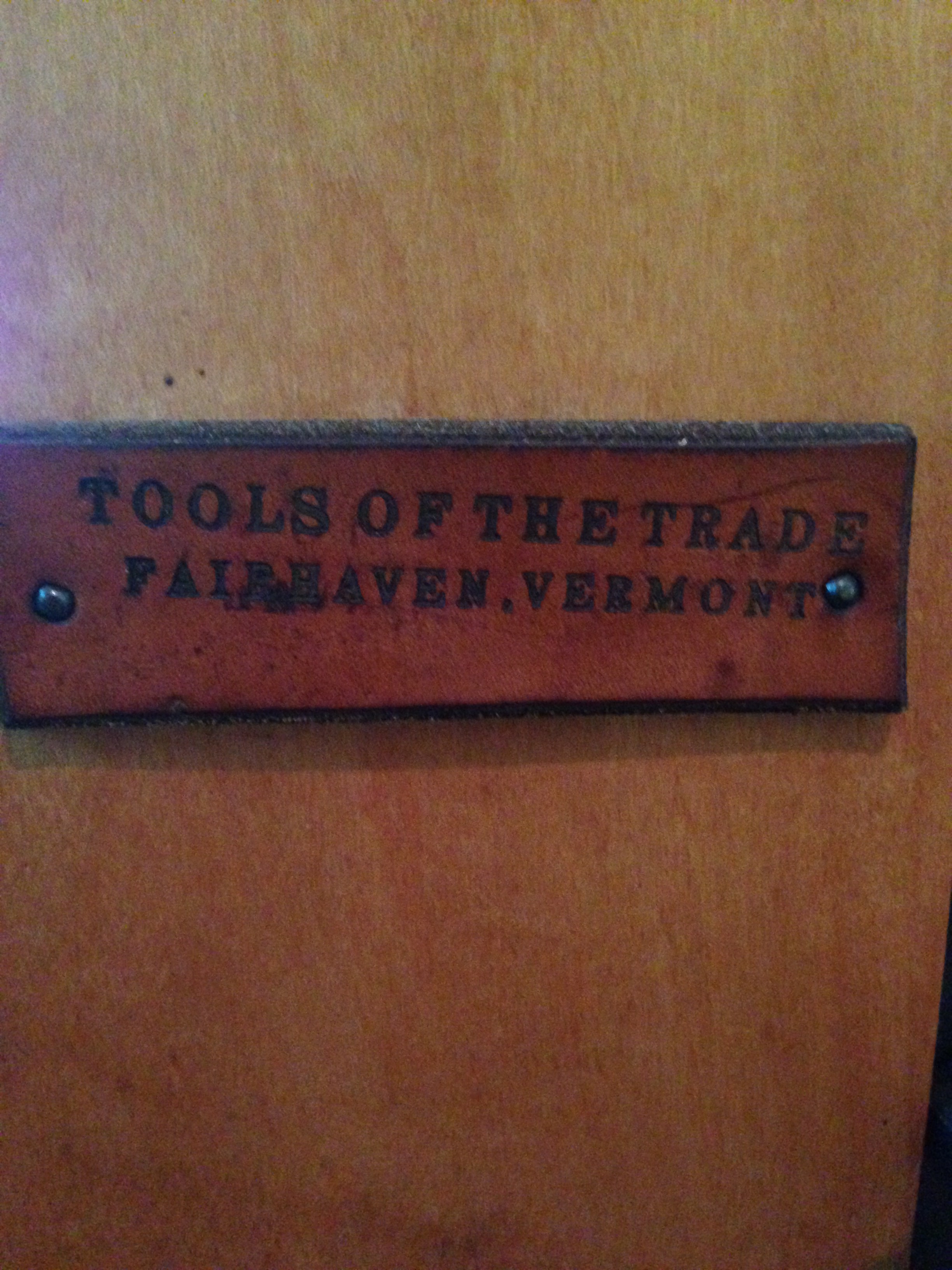
My first loom came with a label on it.

IMG_0443

I’m familiar with some well known loom manufacturers, but I had never heard of Tools of the Trade. Googling led me to some information, much of it obtained from http://www.weavolution.com/ (the place to go for information on all things weaving-related). It seems that Tools of the Trade looms were made by a man named Art Weitzenfeld during the 1970’s and 1980’s. Most of his looms have two tags, one like you see here and another with a number on it. Mine is missing the number, so I can’t use it to help figure out exactly when the loom was made. Although Mr. Weitzenfeld is no longer making looms, he is still a furniture maker. His beautiful work can be seen here: http://www.vermontfurnituredesigns.com/ . The loom reflects his skilled craftsmanship.

When I got the loom it was in working condition, but had not been used for a while and was rather dirty. My understanding from the seller is that she had traded a larger loom to a weaving teacher for the ToTT loom which had been used by students. In spite of heavy use it is still in great shape. There were a few small parts missing, an S-hook holding the rear brake together had been replaced with what looked like a bent paperclip, and the crank for winding the warp beam was missing. The worst part was that the former owner had apparently been a smoker; the loom reeked of tobacco smoke. In order to get rid of the smell I removed anything cloth from the loom, including the yarn already on the loom as a warp, the front and rear aprons, and the cording. I washed everything with Murphy’s oil soap, added a layer of tung oil finish, replaced the aprons and cording, and I was good to go. The s-hook was not hard to replace and I was able to purchase a crank through Camilla Valley Farm in Ontario, Canada.

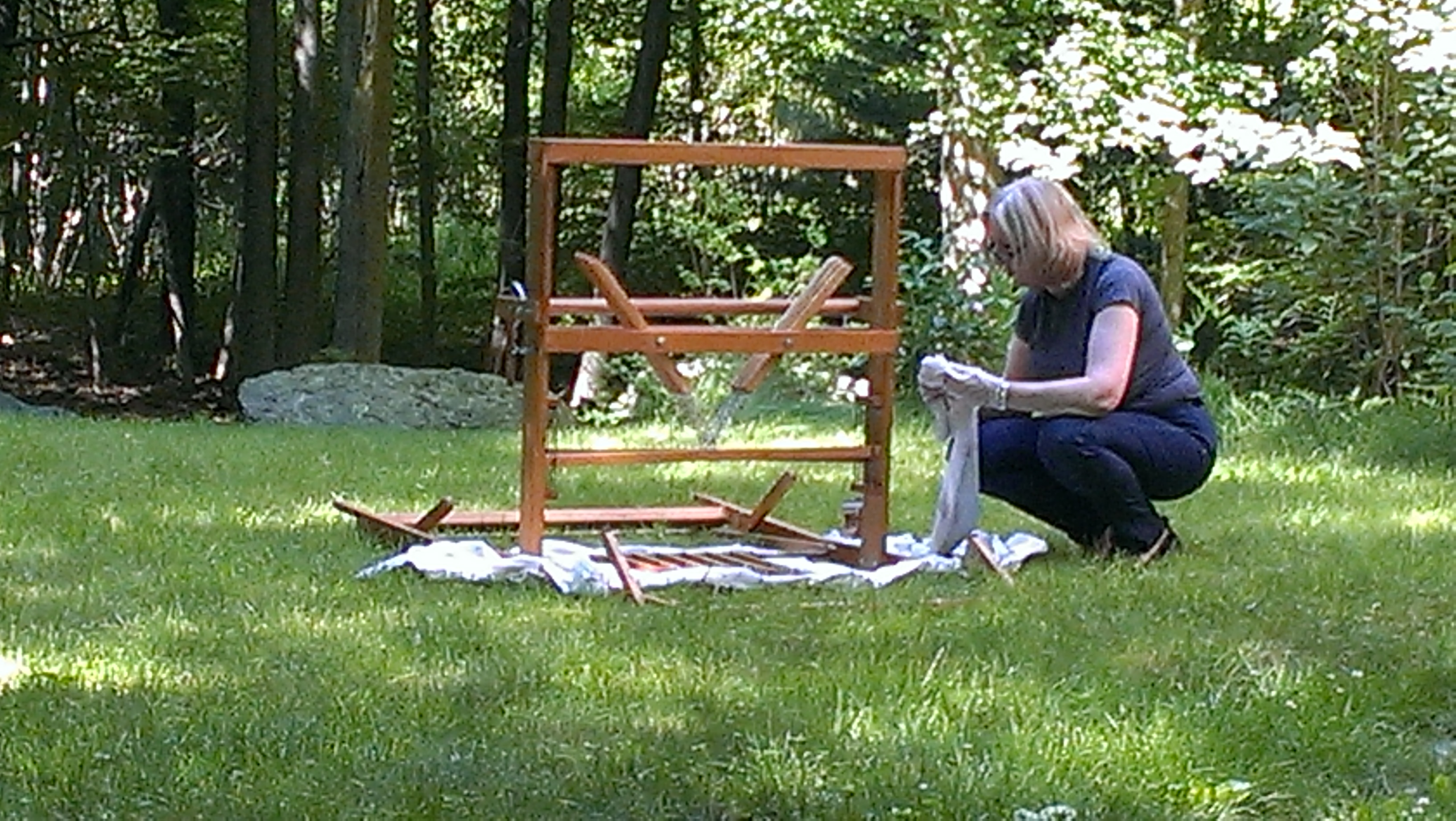
Cleaning up the ToTT loom on a lovely summer day.

Cleaning up the ToTT loom on a lovely summer day.

I enjoyed the process of doing the small amount of restoration the loom needed as it helped me get to know the mechanism better. It also helped me to appreciate the beautiful craftsmanship of this loom. I’ve been using it for a year now and it works smoothly and easily, handling everything from fine silk scarves to heavy rugs.

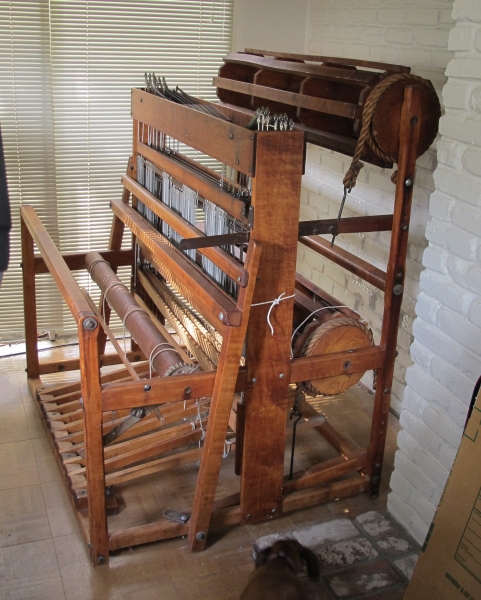
When I entered negotiations to buy my most recent loom, I asked the seller if the loom had a maker’s mark of any kind. She said it did not. She told me she had purchased the loom in the 1970’s from a family friend, who had bought it in Southern California in 1946. I googled looms in California in the 40’s and came up with a few possibilities (most of the information I found came from Weavolution again). The pictures of the loom on Craig’s List showed large, slatted warp beams with a rope brake. One of the possibilities google turned up also had these features. Based on this I responded to the seller and told her that I thought she had a Binder loom. She looked through her files, and discovered that her friend had told her she purchased the loom from a man named Binder, making the identification official.


According to sources on the web Mr. Binder was a weaving teacher who made looms for his students. Each loom is a little different since they were created to accommodate a specific person. This loom has two warp beams; one is a sectional beam. It’s going to take a while to get this loom up and running, but I’m excited to see what it will look like once it is all cleaned up and put back together!

Summer 2015

What I’m Doing on My Summer Vacation

I’ve spent the last year living a life-long dream. As a teenager I decided I wanted a loom (I don’t even remember why). At that age I couldn’t afford a floor loom, but I could purchase a small rigid heddle loom to play with. I used it on occasion, but it was never really what I wanted. I experimented with weaving in different ways over the years: basketry, jury-rigging a backstrap loom out of scraps of wood, and teaching my children to weave on cardboard looms with tapestry needles. The time never seemed right to make the big purchase of a floor loom. Late last spring I happened across a 4-shaft floor loom for sale on eBay. The price was surprising low and, other than needing a little cleanup, it was in working condition. I bought it and have been weaving with it for the last year. I try to spend a little time weaving every day.  I’m loving the contemplative rhythm of weaving.

While I love my little 4-shaft Tools of the Trade loom, I realized early on that I would also eventually like to use an 8-shaft loom. I still have a lot of exploring to do with the 4-shaft loom, but there are even more design possibilities with an 8-shaft. With this in mind I have been keeping an eye out for looms on eBay, Craig’s List, and various other sites where used fiber arts equipment is sold. It can be tricky to find looms since most sellers don’t want to ship, so one is limited to buying from loom owners in the vicinity. Even used looms can be pretty pricey.  A few weeks ago I noticed an 8-shaft loom for sale in my state. The price was very right, but the ad mentioned that parts of the loom were rusted (the reed and the heddles). I contacted the seller to get more information and make sure that all the loom’s pieces were in her possession since she had taken the loom apart for transport several years ago. The loom had been living in her basement. Long story short I went ahead and bought the loom, and now am facing the lengthy project of cleaning it up and making it usable once more.

We had to take the loom apart even further to get it from the owner’s basement to the U-Haul van we picked it up in. It now resides, in pieces, in a spare bedroom while I work on cleaning it up.

084

I started cleanup with the lamms, slats of wood that interface between the treadles and the jack mechanism that lifts the shafts. Each lamm has twelve small eyebolts, all of which were rusted.

090

In fact, there is a thin layer of rust on every metal part of the loom. My plan is to first remove the rust, second clean up the wood, and when everything is clean and shiny put the loom back together.  For the metal that is attached to wood I am spraying the metal with WD-40 and scrubbing with steel wool.  I am concerned about using anything more caustic than the WD-40 against the wood.

After getting the rust off the lamms, I started on the harnesses. They only have a couple eyebolts but the side pieces are metal. There’s more metal on the harnesses than on the lamms, but it’s easier to get at and cleans up faster. I completed removing rust from the harnesses today. Now there are various wooden pieces with bolts or small metal pieces attached that need cleaning.

As the Craig’s List ad mentioned, the heddles are also rusted. My initial decision was to discard and replace them, since heddles are easily obtained, but then I checked the cost of replacing them and decided cleaning them wouldn’t be all that hard. I am soaking batches of heddles in Coca Cola and polishing them with steel wool and a little WD-40. While I clean them I’m also making sure they’re all oriented the same way (the eye in a heddle is tilted toward one side, so they are right or left-handed), and counting them. There were heddles on the loom and heddles in a shoebox. The current clean heddle count is 700.

091098

The work is actually moving along more quickly than I anticipated, so perhaps I’ll have some vacation time left for a weaving project as well!